

“Trauma does not only shape memory, but it shapes the nervous system, the body, and how we move through the world. Understanding these connections creates possibility & change”
My Therapeutic Philosophy
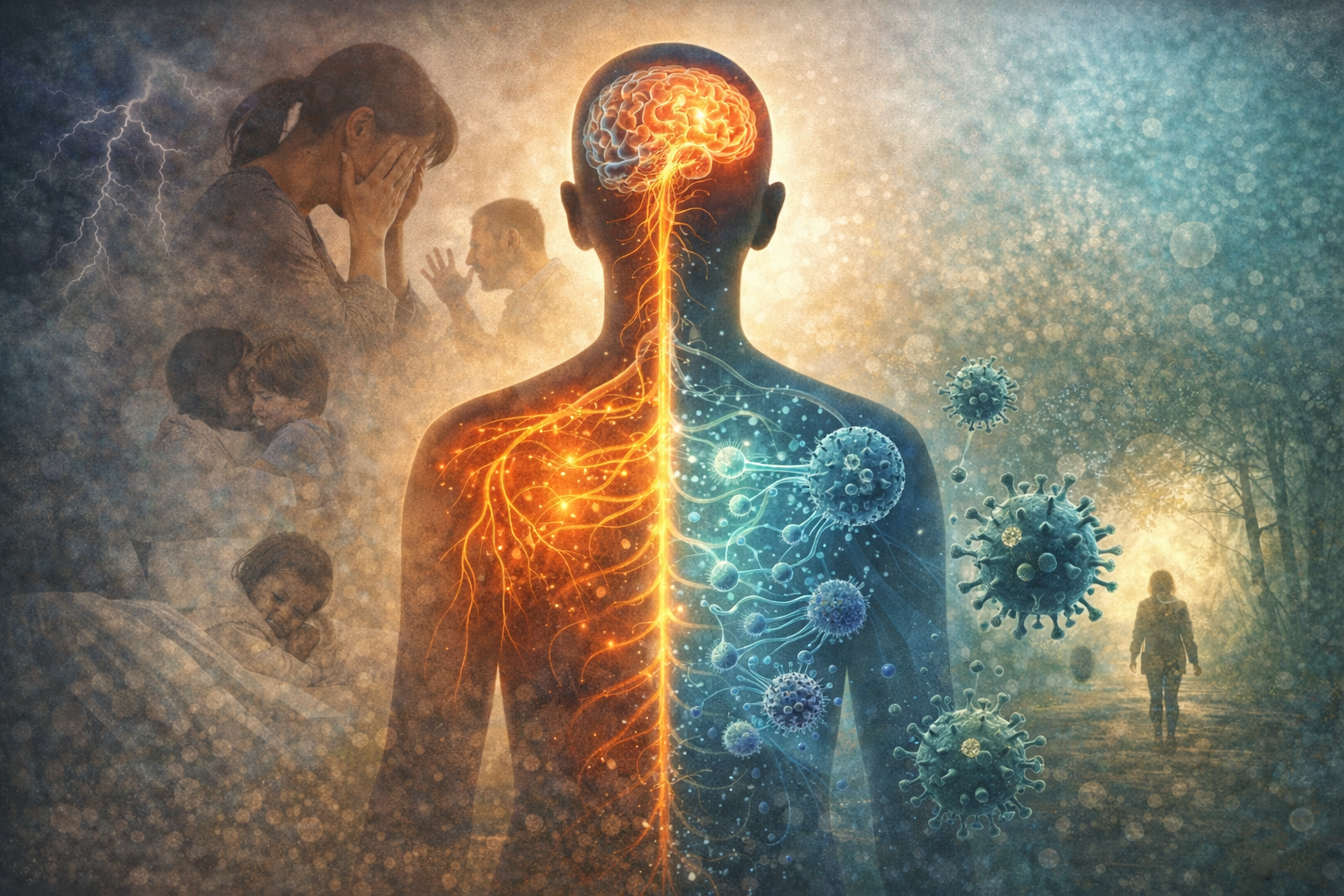
My approach recognises that trauma does not only affect thoughts and memories, it can influence how the nervous system and immune system function over time.
When someone has lived through prolonged stress, domestic abuse, childhood adversity or ongoing threat, the body adapts in order to survive. The stress response can become heightened, prolonged or dysregulated. For some, this contributes to anxiety, shutdown, burnout or difficulty feeling safe. For others, chronic activation of the stress response can interact with immune functioning and influence how physical symptoms are experienced.
These responses are not weakness. They are adaptations.
Part of our work involves understanding these connections. When you can make sense of how your experiences have shaped both your nervous system and your physical health, it often reduces self-blame and increases clarity. We focus on building regulation, safety and awareness, supporting your system to move out of constant survival mode where possible.
Therapy is a collaborative process that invites curiosity, readiness and a willingness to gently challenge patterns that may once have been protective. As understanding deepens, new possibilities for choice and change often begin to emerge.
How I Work in Practice
In our work together, you may begin to understand:
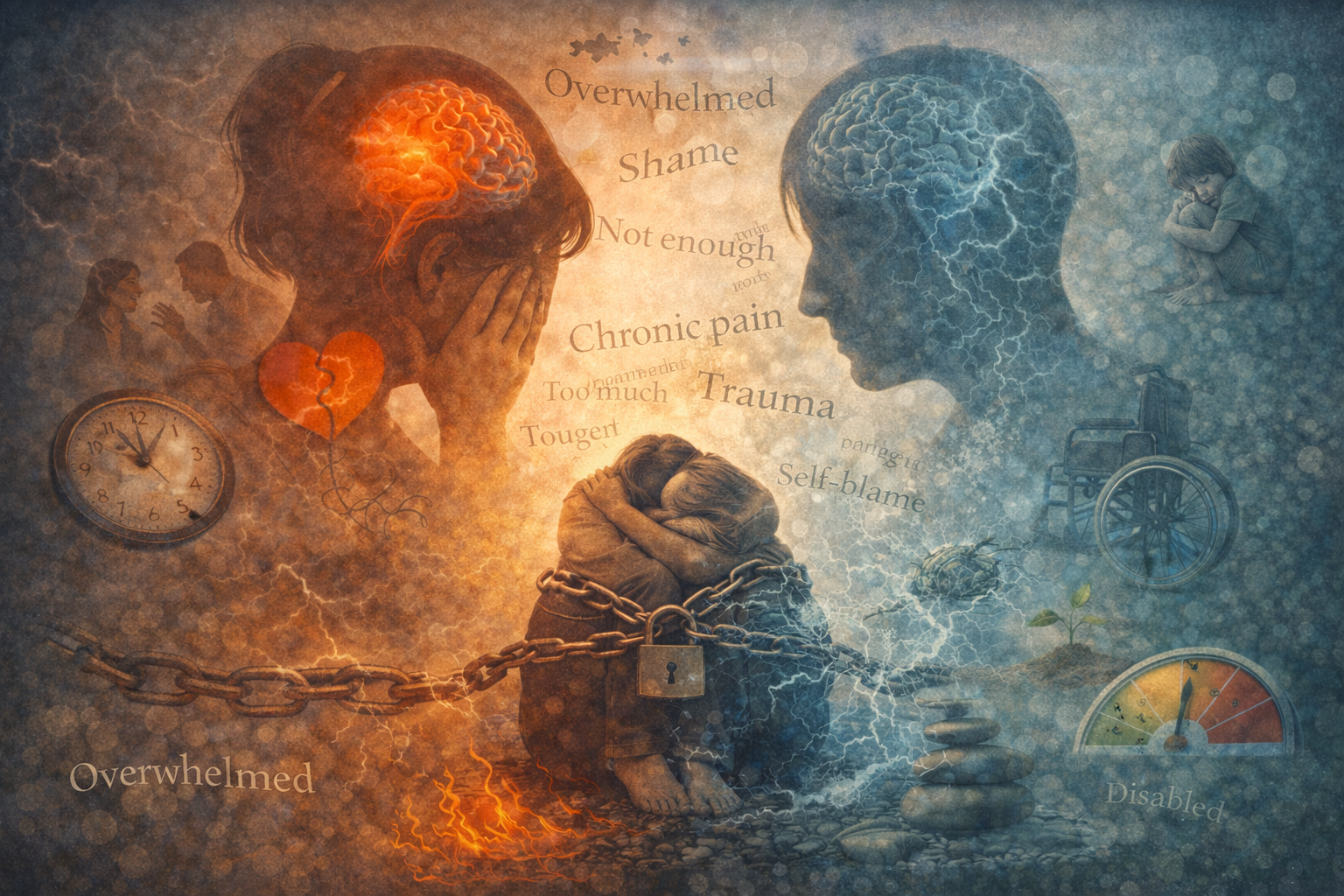
Why you feel constantly on edge, overwhelmed, emotionally reactive — or at times completely shut down — and what is happening in your body when this occurs
Why certain relationship patterns repeat, even when you are trying to avoid them
How experiences such as domestic abuse, coercive control or childhood adversity may still be shaping your sense of safety, trust and identity
The cumulative impact of living with chronic pain, disability or long-term health conditions — including the exhaustion, isolation and emotional toll that often go unseen
Where persistent shame, self-blame or the feeling of being “too much” or “not enough” has developed
How to recognise your limits, strengthen boundaries, and respond to stress in ways that feel steadier and more intentional
As these connections become clearer, many people experience a profound sense of relief. What once felt confusing, personal or “wrong” begins to make sense in context. From that place of understanding, greater stability, self-compassion and informed choice can begin to develop.
My work brings together psychological insight with an understanding of how trauma, stress and chronic illness interact within the nervous and immune systems — offering a framework that helps many people see their experiences through a new and more compassionate lens.
Lived Experience
I bring lived experience of disability, chronic pain and domestic abuse to my professional work.
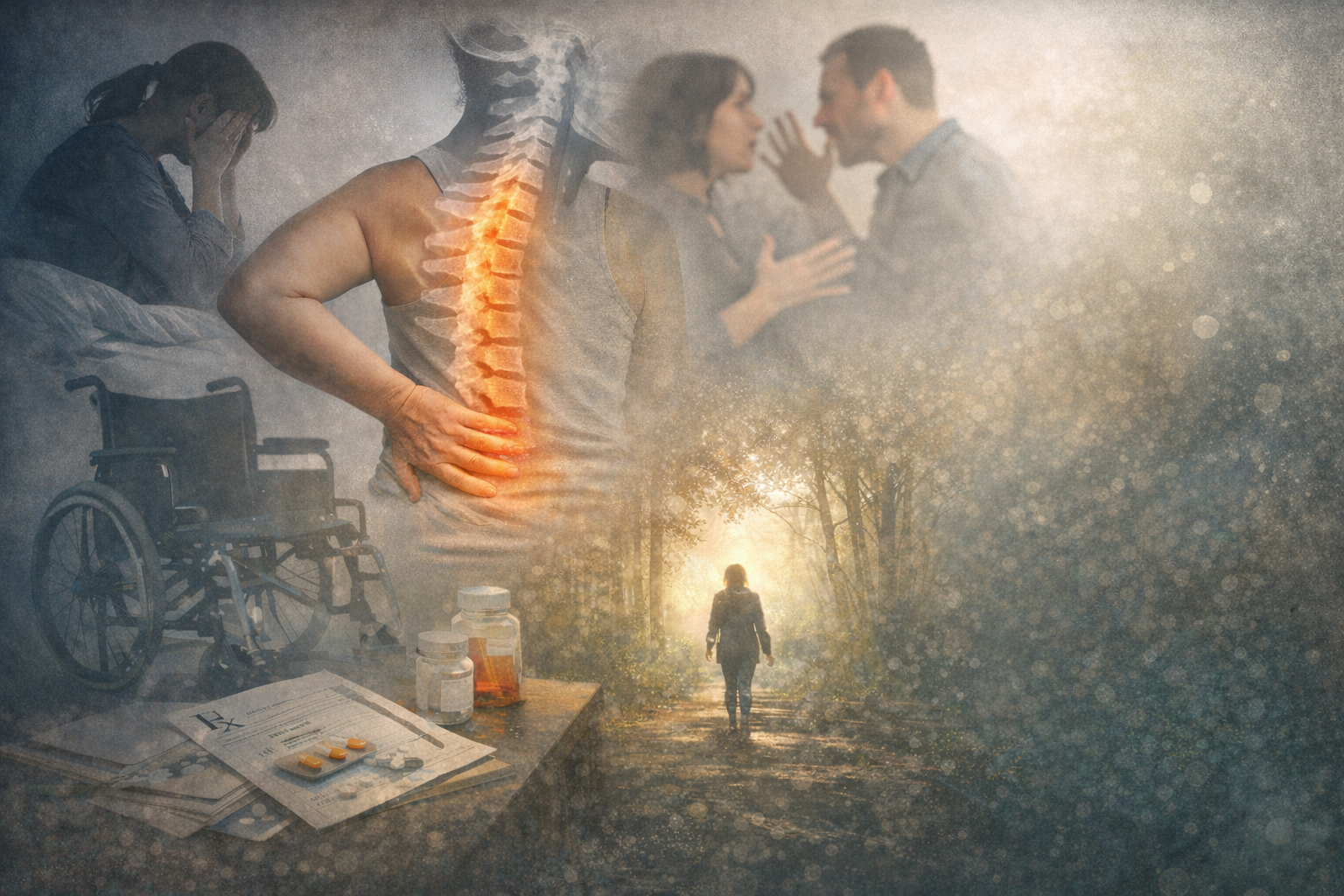
Living with chronic pain or long-term health conditions is not only physically demanding, but it can also be exhausting, isolating and frequently misunderstood. Navigating services, relationships and daily life while managing fluctuating symptoms often requires resilience that goes unseen. When disability or chronic illness intersects with domestic abuse or prolonged stress, the complexity deepens.
These experiences have shaped not only my therapeutic perspective but also my leadership within disability and domestic abuse services. They have informed my understanding of systemic barriers, the cumulative physiological impact of prolonged stress, and the ways in which both survivors and disabled individuals can find their realities minimised or questioned.
My voice within strategic and partnership work is grounded in both professional expertise and lived experience, advocating for trauma-responsive and disability-inclusive practice that reflects the real-world complexity people face — particularly where health, stress and relational harm intersect.
Within the therapeutic space, my experiences are not centred. However, they inform the depth of empathy, clarity and integrity I bring to my work. I understand, both professionally and personally, how complex, exhausting and at times invisible these intersections can feel.
My commitment is to offer therapy that honours that complexity — without dismissal, oversimplification or judgement — and that recognises both the strength required to survive and the possibility of change.
Professional Background & Leadership

Over the past three years, I have led and collaborated on strategic mapping of disability and domestic abuse provision across North Somerset, working in partnership to identify systemic gaps, access barriers and opportunities to strengthen safety and inclusion.
A central focus of my work has been supporting services and professional communities to move beyond trauma-informed awareness towards trauma-responsive practice. While trauma-informed frameworks represent important progress, I am committed to ensuring that understanding translates into embodied, relational and systemic change.
This includes deepening awareness of nervous system responses in practice, strengthening disability-inclusive safeguarding approaches, addressing the additional risks faced by those living with chronic health conditions, and ensuring that trauma language is reflected in genuine relational safety, not only policy.