
Domestic Abuse, Disability & Chronic Conditions
Trauma is Real - It can affect how we think, feel and experience the world. But with the right support healing is possible.
Trauma from domestic abuse does not simply disappear once someone leaves. Its impact can remain within the nervous system, body and sense of safety long after the abuse has ended.
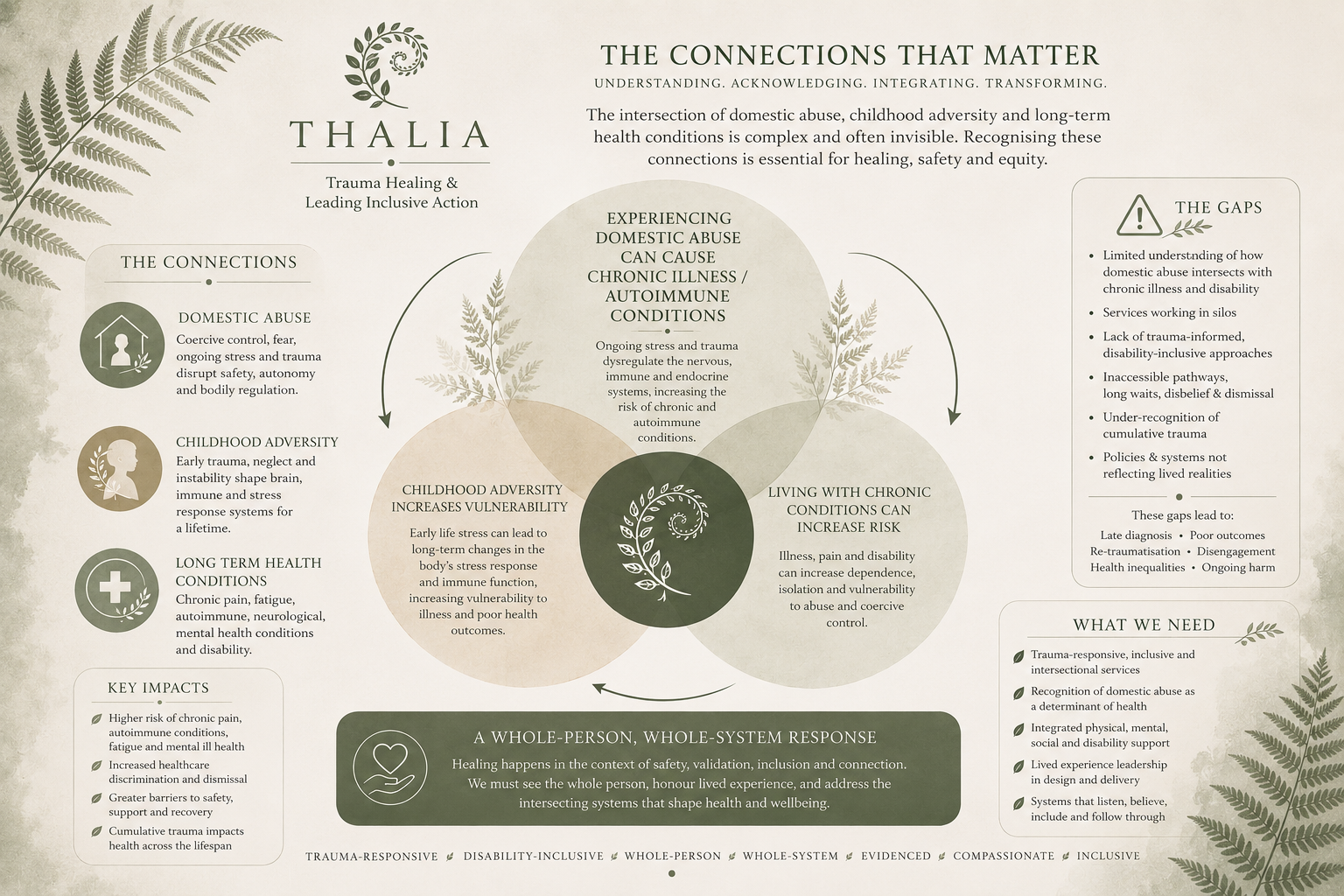
Many survivors live with the lasting effects of trauma, including chronic pain, fatigue, autoimmune conditions, anxiety, depression and disability. These experiences are real, interconnected and often misunderstood.
Healing begins when people are met with safety, understanding and compassionate, trauma-responsive support.

The Connections That Matter
The intersection of domestic, childhood adversity and long-term health conditions is complex and often invisible. Recognising these connections is essential for healing, safety, and equity.