
A Space to Make Sense of What You’re Carrying

Many people come to therapy feeling anxious, exhausted, overwhelmed or stuck in patterns they don’t fully understand.
Some are living with the impact of trauma or domestic abuse. Others are managing chronic pain, disability or long-term health conditions. Some just feel that something doesn’t feel right, even if they can’t yet put it into words.
My approach is simple:
Let’s understand what’s happened, what’s happening now, and what might help things feel different.
Life Rarely Fits Neatly Into Categories
The experiences we have can shape us emotionally, psychologically and physically.
🌿 Trauma isn’t just about memories.
🌿 Disability isn’t only about physical symptoms.
🌿 Chronic stress doesn’t just affect how we feel.
🌿 Relationship difficulties are often about much more than communication alone.
They all interact!Rather than looking at these things separately, I believe it’s important to understand the bigger picture and how the different pieces connect.

What does Trauma-Responsive Therapy mean?
Trauma is not only about what happened to you.
It is also about how your brain, mind, nervous system and body adapted in order to survive.
You may notice:
🌿 Anxiety or constant worry
🌿 Feeling on edge or hyper-alert
🌿 Difficulty trusting others
🌿 People-pleasing
🌿 Emotional numbness
🌿 Difficulties with boundaries
🌿 Persistent self-doubt
🌿 Physical symptoms that reoccur and difficult to know what triggers them
🌿 Chronic pain and Fatigue
These are not character flaws. They are often understandable survival responses.
I work from a trauma-responsive and Psychoneuroimmunology (PNI)-informed perspective. Research shows that trauma and chronic stress can affect not only our thoughts and emotions, but also our nervous system regulation, physical health and overall wellbeing.
Understanding these connections can offer a different lens — one that replaces shame with understanding and confusion with clarity.
Living with Disability, Chronic Pain or Long-Term Health Conditions
Living with chronic pain, autoimmune conditions or disability can be exhausting and isolating.
You may have learned to minimise your own needs, push through symptoms, or feel misunderstood by services and professionals. Chronic stress and trauma can also affect immune functioning and nervous system regulation, creating complex interactions between emotional and physical health.
In therapy, we can explore these connections without reducing your experience to “just psychological” or separating body and mind. Your physical reality is taken seriously.
Domestic Abuse & Relationship Patterns
Domestic abuse does not always look the way people expect.
It can involve coercion, emotional control, financial restriction, psychological manipulation or subtle shifts in autonomy. Many people only recognise the impact once they are already struggling with anxiety, self-doubt or persistent stress responses.
Therapy can support you to understand these patterns, rebuild a sense of agency, and develop boundaries that feel grounded rather than forced.
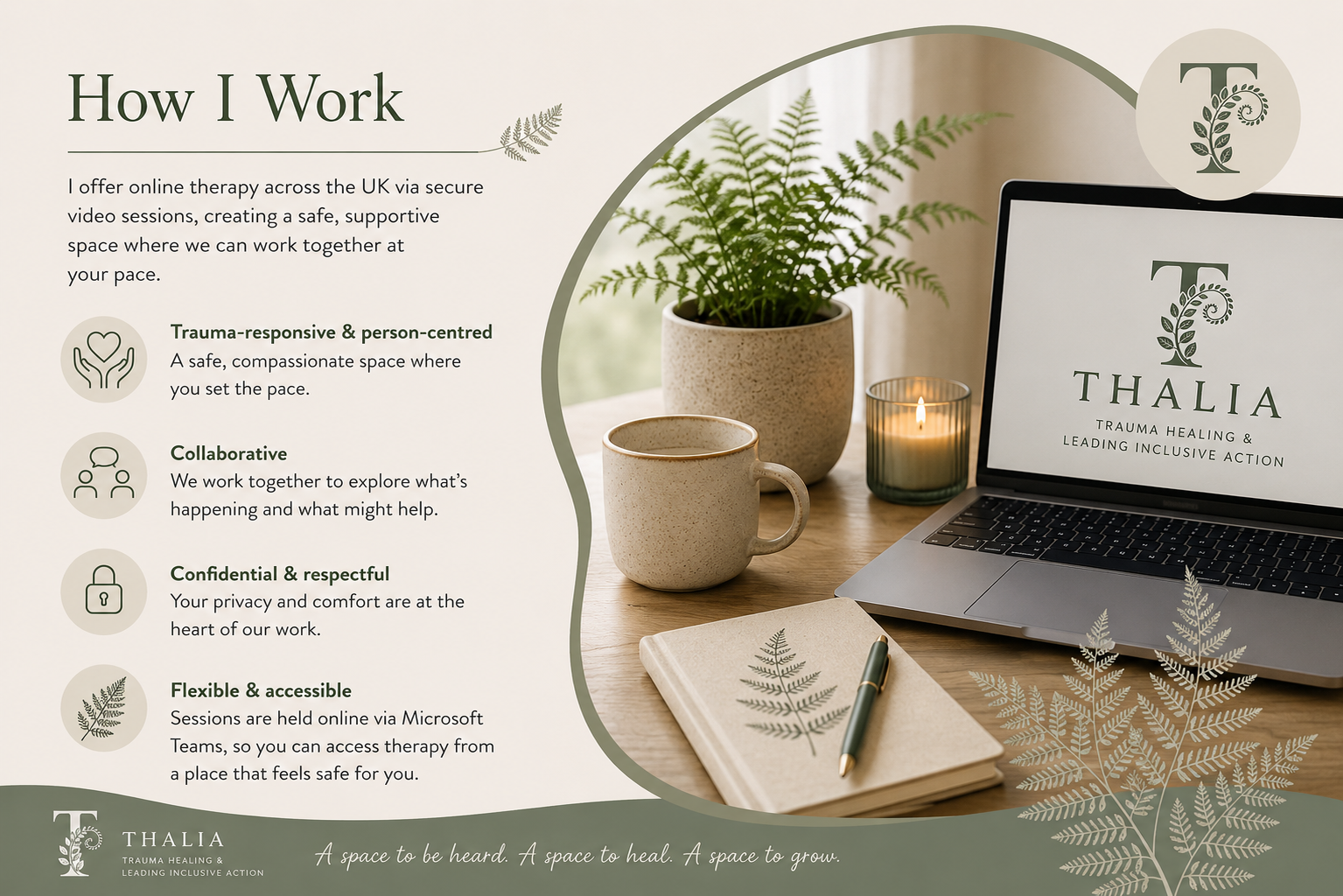
I offer online therapy across the UK via secure video sessions.
My approach is person-centred, collaborative and trauma-responsive. Together we can explore patterns, relationships, emotions and experiences at a pace that feels safe and manageable for you.
There is no pressure to disclose more than feels comfortable. Therapy is a space where understanding can develop gradually, helping you build greater self-trust, self-compassion and confidence in your own choices.
Practical Information
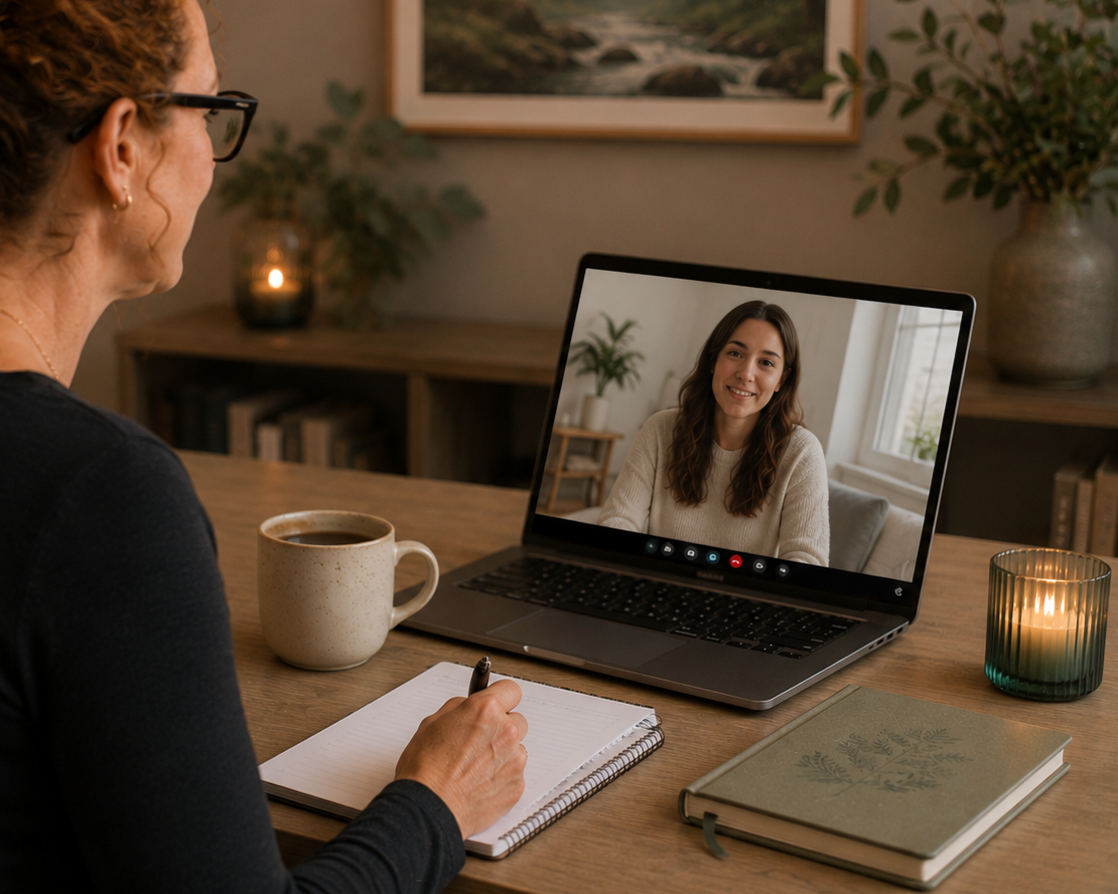
Online sessions via Microsoft Teams
60-minute appointments
Weekly or fortnightly sessions
Available across the UK
Therapy Sessions
Individual online therapy sessions are 1 hour and cost £60 per session.
A limited number of concessionary spaces may be available for those on a low income, subject to availability.
Before Booking
I understand that finding the right therapist is an important decision.
If you have questions about therapy or would like to discuss whether I may be a suitable fit for your needs, you are welcome to contact me by email or arrange a brief telephone conversation before booking.
Ready to Begin?
Sessions take place online via secure video appointment.
To enquire about availability or arrange your first session, please get in touch.
Contact Me
Interested in working together? Fill out some info, and I will be in touch shortly. We can’t wait to hear from you!